
Owens Corning Vapor Barrier Installation: The Woodland Hills Owner’s Guide
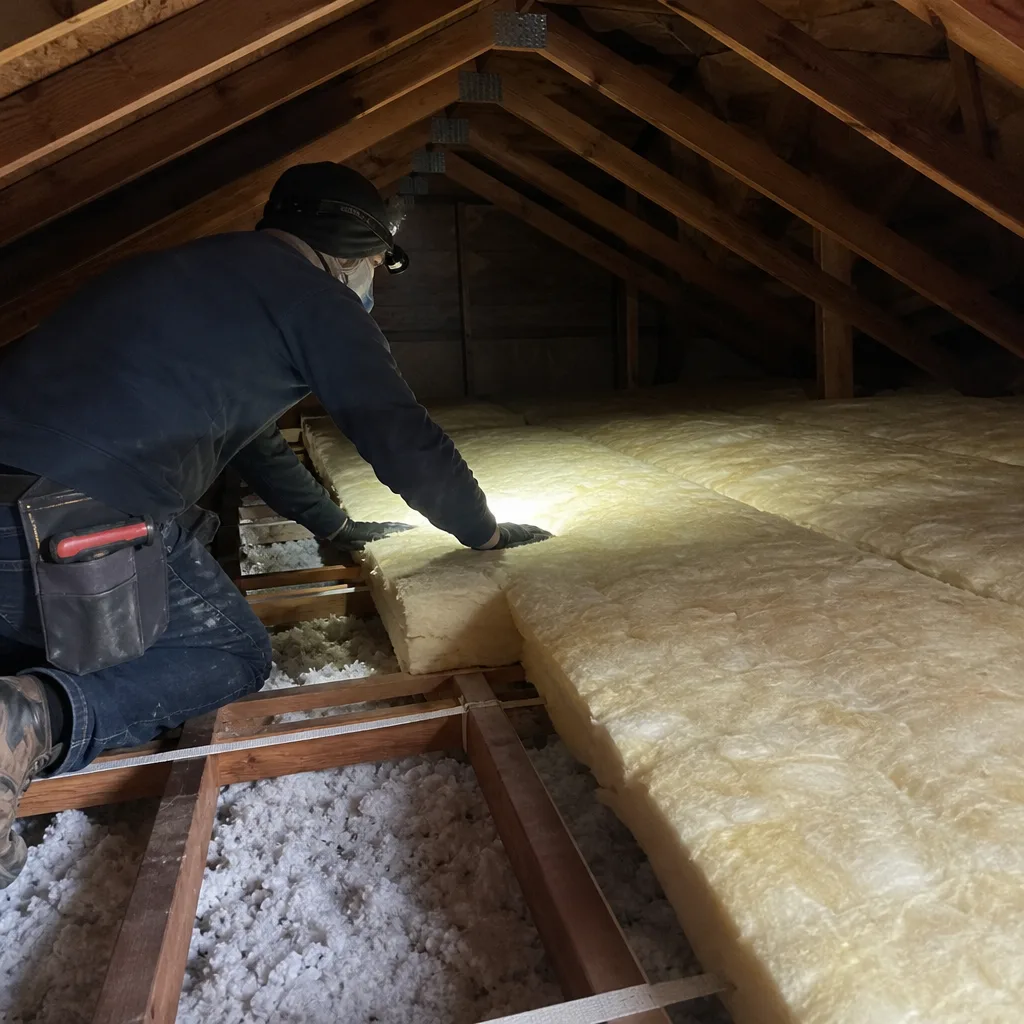
If you’re looking for Owens Corning vapor barrier installation in Woodland Hills, here’s the short version: we stock Owens Corning vapor barrier materials on our trucks, typical installed costs run $1.40 to $2.60 per square foot depending on your attic’s access and condition, and most homes around Warner Center, Walnut Acres, and the hills above Ventura Boulevard are done in a single day. Vapor barriers fail quietly. You usually find out when you spot condensation on attic sheathing, a musty smell near the ceiling, or insulation that looks matted down and damp in one section while the rest stays dry. In Woodland Hills, the temperature swings between hot days and cool coastal nights push moisture into attics faster than most homeowners realize. We’re an independent installer, not an Owens Corning affiliate, but we work with their vapor barrier products every week.
Key Takeaways:
- Owens Corning vapor barrier installation in Woodland Hills typically runs $1.40 to $2.60 per square foot installed
- Most single-attic replacements wrap up in 4 to 7 hours
- We stock Owens Corning vapor barrier rolls and tapes on our trucks for same-day work
- Written price before the first tool comes out, every time
- Backed by our 365-Day Done Right Promise
Which Owens Corning Models This Applies To
Owens Corning vapor barrier products fall into a few specific lines, and knowing which one belongs in your attic matters. The two most common we install in Woodland Hills homes are the Owens Corning AttiCat loose-fill system with its accompanying vapor retarder membrane and the Owens Corning FOAMULAR rigid foam board with a factory-laminated vapor barrier facing. If you’re looking at an existing installation, check the printed edge label on the barrier material, it will carry an Owens Corning product code that starts with a letter designation. The gotcha we see all the time: homeowners buy general-purpose vapor barrier from a big box store, then wonder why it sags and fails within two years. Owens Corning vapor barrier materials are engineered for attic temperatures that hit 130 degrees in a Woodland Hills August, and generic alternatives simply are not rated for that sustained heat. If you have an older LA basin ranch-style home, the ones built between 1950 and 1975, there’s a good chance your original vapor barrier was stapled kraft paper that has long since disintegrated. Neil Barron, our owner, has insulated dozens of these older homes near Warner Center and knows exactly what those attics look like when the barrier has failed.
Signs Your Owens Corning Vapor Barrier Installation Is Failing
- Condensation on the attic sheathing in the morning. This is the most common first sign in Woodland Hills. Warm, moist air from the house moves up into the attic, hits the cooler sheathing, and condenses. A functioning vapor barrier blocks most of that moisture migration. If you see water droplets or dark staining on the underside of the roofline, the barrier has either failed or was never installed correctly.
- Insulation that looks flattened or damp in patches. When a vapor barrier tears or sags, moisture settles into the insulation below it. Fiberglass and cellulose both lose R-value when wet. You’ll notice sections where the insulation looks compacted, darker, or feels heavier than the surrounding areas.
- Musty odor in the rooms directly below the attic. Trapped moisture breeds mold and mildew in the insulation and on wooden joists. The smell is often strongest in bedrooms near the attic hatch or in hallways directly under the attic access point.
- Visible sagging or tearing of the barrier material. If you pop your head into the attic and see the barrier hanging down between joists, or split along staple lines, it’s no longer doing its job. High heat degrades the material over time, and cheap installation with incorrect staples or spacing leads to premature failure.
- Higher humidity in the home during winter months. Woodland Hills gets cool, damp winters. Without a working vapor barrier, moisture from showers, cooking, and laundry rises into the attic instead of staying managed. You’ll notice condensation on window frames and a general clammy feeling that wasn’t there before.
Replacement Cost & What’s Included
For a typical Woodland Hills attic, expect to pay between $1.40 and $2.60 per square foot installed. A standard 1,500 square foot attic runs $2,100 to $3,900. What drives the range: attic headroom and accessibility (crawl spaces with low clearance take longer), the condition of your existing insulation (we remove and replace anything water-damaged), and whether we need to re-staple or install new support bracing for the vapor barrier. Every quote includes the barrier material, fasteners and tape, removal of the old failed barrier, installation, and full clean-up. Before we touch a rafter, you have a written number. That’s not a courtesy, it’s how we work here. The 365-Day Done Right Promise applies to every vapor barrier installation we do in Woodland Hills: if something isn’t right within a year, we come back and make it right. No debate, no fine print.
DIY or Call Us?
Vapor barrier installation is one of the less dangerous attic jobs, no high-tension springs or exposed wiring involved. But “less dangerous” doesn’t mean easy. The honest truth: what looks simple on a YouTube video gets complicated inside a 120-degree Woodland Hills attic with tight joist spacing and nineteen years of accumulated dust. You can safely check the condition of your barrier with a flashlight from the attic hatch: look for sagging, tears, dark staining, and wet insulation. What you should not attempt is a full replacement in a tight attic without proper crawl boards, dust protection, and knowledge of how to stagger seams and seal around penetrations like vent pipes and electrical boxes. Improperly sealed seams leak moisture just as effectively as no barrier at all. If you’d rather have it handled by a crew that wears shoe covers to the attic hatch and leaves a photo of the clean-up before the van pulls away, call us at (559) 245-9223.
FAQs
In a properly installed Woodland Hills attic, an Owens Corning vapor barrier typically lasts 15 to 25 years. The failure point is usually heat degradation of the material combined with poor initial installation. The hotter, drier summers north of the 101 put more thermal stress on barrier materials than coastal homes experience, so we inspect barrier condition every time we’re in an attic for any job. Call (559) 245-9223 to schedule a check if your home is in that age range.
A small tear under two feet can sometimes be patched with the correct Owens Corning sealing tape, but the truth is most failures we see in Woodland Hills attics are widespread deterioration rather than isolated damage. If the barrier is sagging between joists, split along multiple staple lines, or damp, patching buys you months, not years. Replacement costs less than most homeowners expect, and you’ll have a written price before any work begins.
Most single-attic vapor barrier installations in Woodland Hills wrap up in 4 to 7 hours. Factors that add time: vaulted or low-slope ceilings, heavy water damage requiring insulation replacement, and attics with extensive wiring or HVAC ducting to work around. We tell you exactly what to expect before the first tool comes out.
Yes. Our trucks carry Owens Corning vapor barrier rolls, sealing tape, and fasteners so we can often complete the work same-day without a supply run. We also work with products from Johns Manville, Knauf, Rockwool, CertainTeed, Icynene, Demilec, GreenFiber, and Reflectix, so if your attic calls for a different material spec, it’s on the truck too. Neil’s rule is simple: know what goes in before the first board comes down.
Ready for a Straight Answer?
If your Owens Corning vapor barrier is failing and you want a real number, not a vague range, call us at (559) 245-9223. A live person answers, 24 hours a day, every day. We’ll walk the attic with you or explain over the phone what we’re seeing, what it costs, and what we’ll do. Written price before any work starts, shoe covers at the door, and a photo of the clean-up before we leave. That’s how we work in Woodland Hills.
Written by Neil Barron, Owner, Thistledown Insulation Woodland Hills at Thistledown Insulation Woodland Hills, serving Woodland Hills and nearby areas.