
Knauf Vapor Barrier Installation: The Woodland Hills Owner’s Guide
Knauf vapor barrier installation in Woodland Hills typically runs $1.75 to $3.10 per square foot installed, including the barrier material, seam taping, and full attic perimeter coverage, with most single-family homes landing between $2,800 and $6,200 depending on attic size and access difficulty. We stock Knauf-compatible vapor barrier rolls on our trucks and can usually start the job within 48 hours of your written estimate.
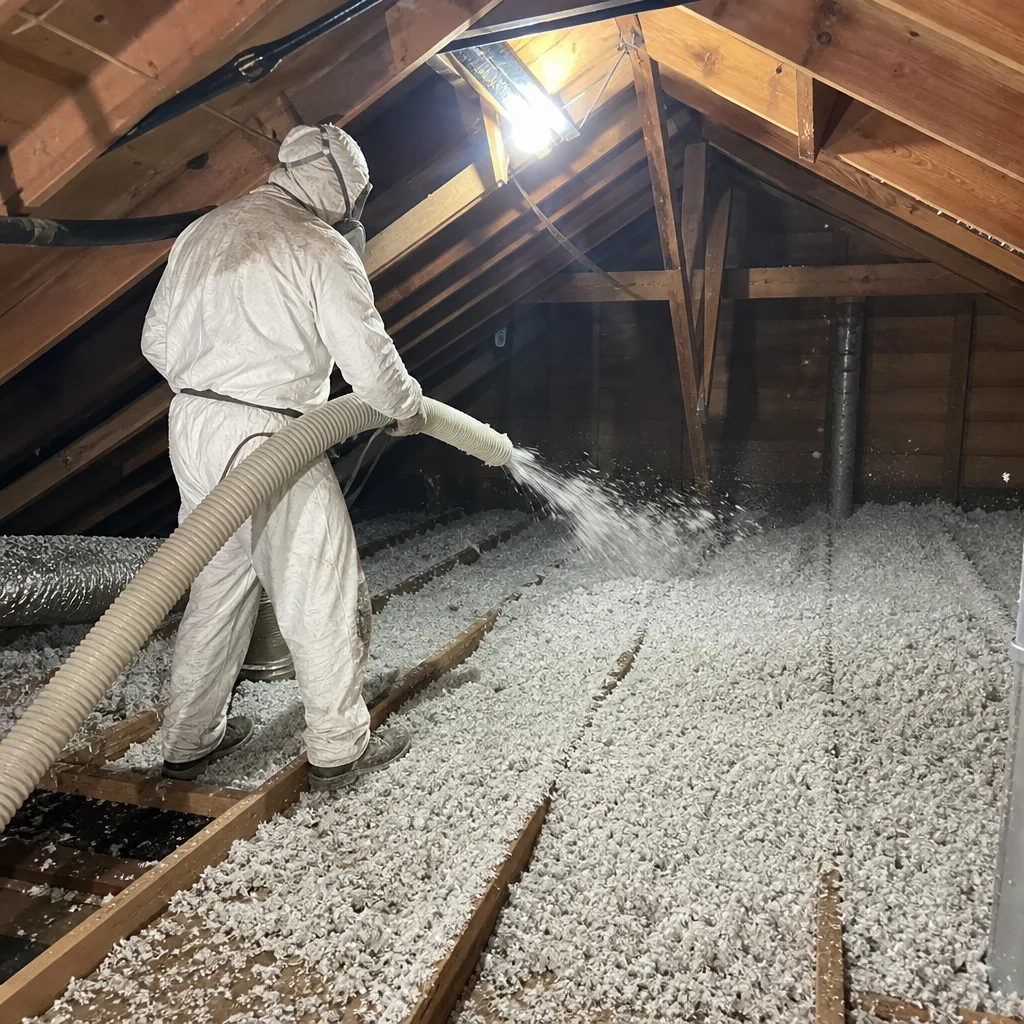
Most homeowners discover their vapor barrier has failed the same way: a musty smell that won’t go away, flaking drywall tape along ceiling seams, or a spike in the cooling bill during a Woodland Hills August. The barrier that should be keeping warm, moist air out of the attic has torn, pulled away from the framing, or was never installed correctly in the first place. What you’re seeing is the symptom. The fix is a properly sealed, correctly overlapped vapor barrier matched to your Knauf insulation system.
Key Takeaways
- Installed Knauf vapor barrier in Woodland Hills costs roughly $1.75 to $3.10 per square foot, all-in.
- We stock barrier rolls on the truck; most jobs start within two business days.
- Vapor barriers fail fastest when seams aren’t overlapped by at least 6 inches and taped.
- You get a written price before any work starts. That’s not an option, it’s how we operate.
Which Knauf Models This Applies To
Knauf’s insulation lineup for Woodland Hills homes spans their EcoBatt fiberglass batts, Jet Stream blown-in fiberglass, and their crawl space and wall cavity systems. The vapor barrier question matters most in vented attics where batt or blown fiberglass sits directly against the attic floor. If you’re running EcoBatt R-30 or R-38 across your ceiling joists, the vapor barrier faces the conditioned space below, and that’s the layer we’re replacing or correcting.
Here’s the compatibility gotcha most people miss: Knauf EcoBatt fiberglass batts come with a kraft paper facing that acts as the vapor retarder on one side. If that facing is installed upside down or gets torn during a previous retrofit, the barrier stops working even though the insulation looks fine from above. A separate 6-mil polyethylene sheet is the usual fix for blown-in Jet Stream applications or any time the original facing has failed. We match the barrier approach to your specific Knauf product, not the other way around. One more thing worth knowing: Thistledown Insulation Woodland Hills is an independent installer, not affiliated with Knauf, and we also stock Reflectix radiant barrier products for homes that want attic heat reflection alongside vapor control.
Signs Your Knauf Vapor Barrier Installation Is Failing
- Musty odor that gets worse after rain. Moisture is moving from the living space into the attic and getting trapped in the fiberglass. The vapor barrier has a gap or tear somewhere, and the damp insulation is holding that smell. In Woodland Hills, winter rains make this symptom spike.
- Water stains on ceiling drywall. When warm, humid indoor air reaches the cold attic side of the ceiling, it condenses. That water drips back onto the drywall and shows up as yellowish rings. Your barrier isn’t stopping the air movement.
- Flaking or peeling ceiling paint. Persistent attic-side moisture wicks into the drywall from above. Paint loses adhesion from the underside, and you’ll see it flake near ceiling light fixtures and along seam lines first.
- Puffy, settled insulation with dark patches. Blown-in fiberglass that has absorbed moisture compresses and loses R-value. Dark spots mean water has been sitting there. Walk the attic with a flashlight and look for uneven texture in the Jet Stream coverage.
- Cooling bills climbing without a thermostat change. Wet insulation transfers heat far faster than dry insulation. If your AC is cycling more often and the attic has that damp smell, the barrier failure is costing you real money every month.
Replacement Cost & What’s Included
A full Knauf vapor barrier replacement in a typical 1,800 to 2,400 square foot Woodland Hills ranch or two-story runs between $2,800 and $6,200 installed. Smaller attic spaces with easy access, a standard pull-down ladder and decent headroom, sit at the low end. Homes near Warner Center with low-slope roofs, tight soffit clearances, or blown-in insulation that needs temporary relocation run higher.
What you’re paying for: the barrier material itself (typically 6-mil polyethylene), seam tape rated for attic temperatures, staples and fasteners, removal and disposal of the old failed barrier if present, and full perimeter coverage with 6-inch minimum seam overlaps. Your written estimate breaks this down line by line before we touch a rafter. The installation carries our 365-Day Done Right Promise: if the barrier isn’t holding up the way it should within a year, we return and make it right at no cost to you.
DIY or Call Us?
You can safely inspect your attic’s vapor barrier with a flashlight and a dust mask. Look for tears, gaps at the eaves, missing tape at seams, and any place the barrier has pulled away from framing. That’s the extent of what we’d recommend a homeowner do themselves.
Here’s where DIY goes wrong, and it’s not about danger so much as it is about getting the science right. Vapor barriers fail when seams overlap less than 6 inches, when the barrier runs only halfway to the eave, or when someone staples it directly over recessed light housings that aren’t IC-rated. Any of those mistakes means you redo the job in two years. On top of that, working in a Woodland Hills attic in July means surface temperatures over 120 degrees, and heat exhaustion is a real hazard. We’d rather you call us at (559) 245-9223 for a written quote. As Neil Barron puts it, “Know what goes in before the first board comes down.”
FAQs
In our experience across the San Fernando Valley, a properly installed 6-mil polyethylene vapor barrier holds up for 20 to 30 years, though Woodland Hills’ dry heat tends to make cheap plastic brittle faster than coastal areas. We use material rated for attic temperature extremes, and the 365-Day Done Right Promise covers you if anything fails in that first year. Call (559) 245-9223 for a free attic inspection.
Small tears under 12 inches can sometimes be patched with the right tape and a clean overlap, but if the barrier has pulled away at the eaves or shows multiple tear points, a full replacement costs less than chasing repairs. We’ll tell you which path makes sense after a look at the attic. Call (559) 245-9223 to schedule that assessment.
Most Woodland Hills attic vapor barrier replacements finish in one day, start to finish. Larger homes or attics with heavily settled insulation that needs temporary lifting can stretch to two days. You’ll get a firm timeline with your written estimate, and shoe covers go on before the first step inside.
Yes. We keep Knauf-compatible 6-mil barrier rolls, seam tape, and all fasteners on our trucks, so the job doesn’t wait on a supply run. If your home needs a Reflectix radiant barrier alongside the vapor control, we stock that too. Call (559) 245-9223 and we’ll get you scheduled.
Written by Neil Barron, Owner, Thistledown Insulation Woodland Hills at Thistledown Insulation Woodland Hills, serving Woodland Hills and nearby areas.