
Johns Manville Vapor Barrier Installation: The Woodland Hills Owner’s Guide
We stock and install Johns Manville-compatible vapor barrier in Woodland Hills, with most retrofits running between $1,200 and $2,800 depending on attic square footage and access. We keep rolls on the truck so most jobs happen same day or next morning. The call usually starts the same way: a homeowner notices condensation on the underside of the roof deck in July, or a musty smell drifting down from the attic hatch, or water staining on a hallway ceiling that has no obvious source.
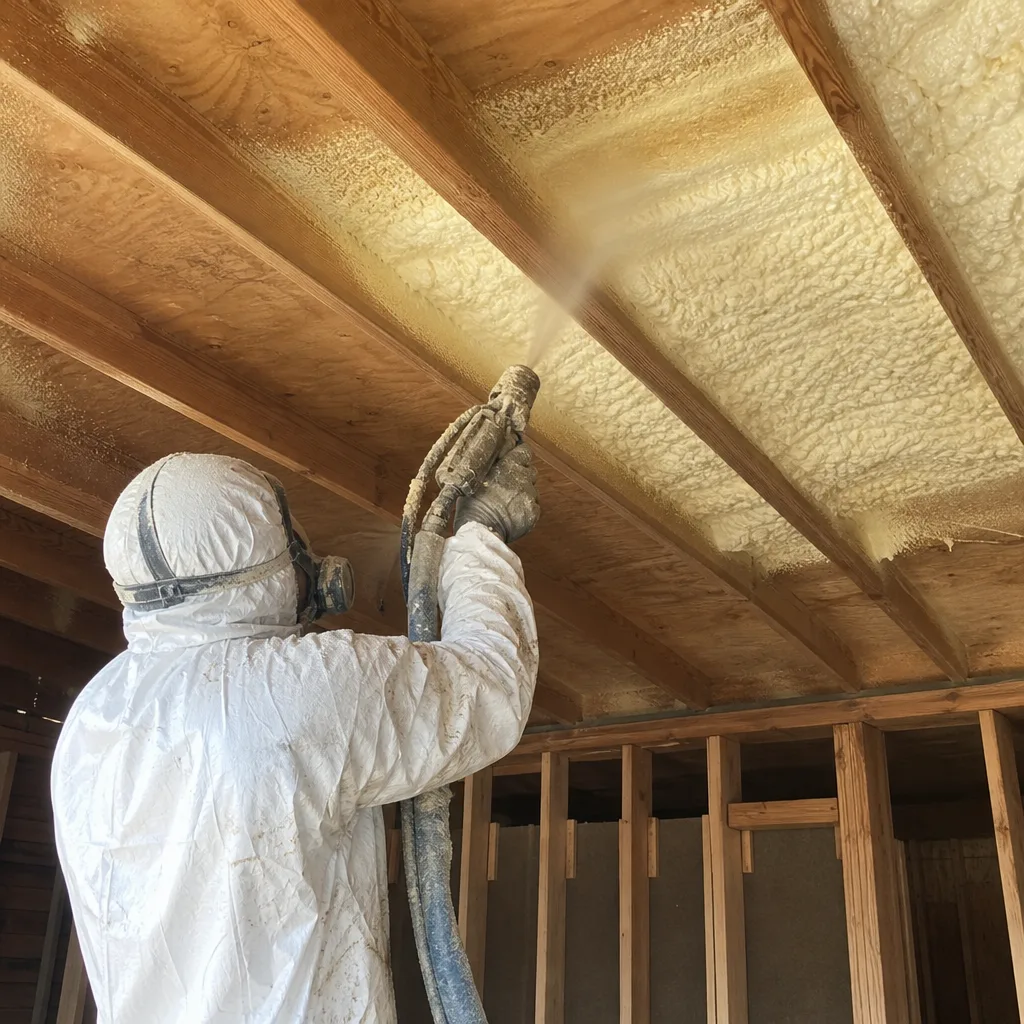
A vapor barrier in a Woodland Hills attic fails quietly for a while before it fails loudly. The poly sheeting tears along staple lines, or a previous contractor installed it on the wrong side of the insulation, or it was never sealed at the seams to begin with. By the time you see the evidence, moisture has been moving through your insulation for months. That is what this page is for: knowing what you have, what went wrong, and what it costs to fix it right.
Which Johns Manville Models This Applies To
The vapor barrier work we do in Woodland Hills applies across the full Johns Manville fiberglass batt and blown-in insulation lines: ComfortTherm, ComfortBatt, and the R-13 through R-38 residential batt series all pair with a poly vapor barrier in a standard vented attic. If your attic has Johns Manville blown-in fiberglass or the kraft-faced batt line, the barrier situation changes: kraft paper is itself a vapor retarder, so a separate poly sheet may not have been needed and may not be what failed.
The compatibility gotcha we see in older Woodland Hills ranch homes: a homeowner reads “vapor barrier” online and assumes the poly sheet in their attic is Johns Manville brand. It almost never is. Johns Manville product code UB and CB insulation carries performance data on the package; the poly itself is typically a generic 6-mil sheet a prior insulation crew supplied. The only true Johns Manville-specific vapor retarder product most homeowners encounter is the kraft facing bonded to batt insulation. What matters is not the brand printed on the plastic; it is the perm rating, the seam taping method, and which side of the insulation it sits on. For a Woodland Hills climate zone (zone 3), vapor barriers belong on the warm side of the wall assembly, which in practice means the attic floor, not the roof deck. We check this on every inspection walkthrough.
Signs Your Johns Manville Vapor Barrier Installation Is Failing
- Condensation on roof sheathing in summer. Warm air carries moisture into the attic, hits the cooler underside of the roof deck, and condenses. A properly placed and sealed barrier keeps that warm moist air out of the attic in the first place.
- Musty odor coming from the attic hatch. Trapped moisture in fiberglass insulation degrades air quality and tells us the barrier is no longer stopping vapor migration. The smell usually peaks in August in Woodland Hills, when attic temperatures push past 140°F.
- Water stains on ceilings without roof leaks. When condensation saturates insulation, it drips onto the drywall below. Homeowners call roofers first, then find out the roof is fine and the vapor barrier is torn.
- Damp or matted insulation. Fiberglass batts absorb moisture and lose their loft. If insulation looks flat, dark, or feels cool and clammy, the vapor barrier above it has likely lost its seal at seams or around penetrations.
- Higher summer cooling bills with no other explanation. Wet insulation does not insulate. When moisture displaces the air pockets in fiberglass, R-value drops. In a Woodland Hills summer, that shows up as an air conditioner running longer to hold the same setpoint.
Replacement Cost & What’s Included
Vapor barrier installation in Woodland Hills typically runs from $1,200 to $2,800. The range depends on three things: attic square footage, how much old material has to come out first, and whether the underlying insulation is salvageable or needs replacement. A simple remove-and-replace barrier in a 1,200-square-foot attic with good access lands near the bottom of that range. A larger attic with water-damaged batt insulation that comes out and gets replaced with fresh Johns Manville ComfortTherm can reach the top.
Every quote from us includes the barrier material, seam tape, removal and disposal of the old barrier, the labor to lay and tape the new sheet, and a final inspection photo. You get a written price before any work begins, and the number on that sheet is the number you pay. The work is covered by our 365-Day Done Right Promise: if the barrier fails or a seam opens within a year of install, we return and make it right. No deduction, no debate.
DIY or Call Us?
You can safely check a few things yourself: look for tears in visible poly sheeting, check if seams are taped, and note whether the barrier sits above or below the insulation. Do not attempt to pull up and re-lay a vapor barrier in a hot Woodland Hills attic without proper ventilation, long sleeves, and a respirator; fiberglass dust and 130°F-plus heat are a rough combination. The real risk is not the plastic. It is working around recessed light fixtures, bathroom fan vents, and electrical junction boxes without knowing clearance codes. A vapor barrier tucked too close to a hot fixture is a fire hazard, and one that blocks attic ventilation creates the exact moisture problem it was meant to prevent.
If you see moisture, smell must, or just want a trained eye on the attic before another Valley summer hits, call us at (559) 245-9223. Neil will walk the attic with you on the phone if that helps, then put the number in writing.
FAQs
A properly installed 6-mil poly vapor barrier typically lasts 20 to 30 years in a Woodland Hills attic. The failure point is almost never the plastic itself; it is the tape at seams and around penetrations drying out and peeling, usually within 10 to 15 years. Call (559) 245-9223 if your home is older than that and we’ll inspect the barrier condition during a free estimate.
Small tears and open seams can be repaired with seam tape and a patch in most cases, and we do this when the rest of the barrier is sound. If the tearing is widespread or the barrier was installed on the wrong side of the insulation, replacement is the honest answer. We’ll show you photos of what we find before we recommend either path.
Most single-attic vapor barrier replacement jobs in Woodland Hills take 4 to 6 hours from setup to final clean-up photo. If the existing insulation also needs to come out and be replaced, the job runs a full day, sometimes two. We’ll tell you the timeline in writing before you commit.
Yes. Our trucks carry 6-mil poly barrier, seam tape, and Johns Manville batt insulation so we can handle most vapor barrier jobs same day or next morning. We also stock Reflectix radiant barrier for attics where a reflective solution makes more sense given how the sun hits the roof.
Call for a Written Price
If your Woodland Hills attic is showing any of the signs above, or you want to know what condition your current vapor barrier is in before summer, call us at (559) 245-9223. A live person answers, every time. Neil Barron will schedule a walkthrough, show you exactly what needs to happen, and hand you a written price before any work starts. Know what goes in before the first board comes down.
Written by Neil Barron, Owner, Thistledown Insulation Woodland Hills at Thistledown Insulation Woodland Hills, serving Woodland Hills and nearby areas.