
GreenFiber Spray Foam Insulation in Woodland Hills: What to Know First
GreenFiber spray foam insulation in Woodland Hills homes usually needs attention when shifting clay soil has pulled a rim joist gap open, or when an older open-cell application has thinned and stopped holding its R-value. We handle it as an independent GreenFiber service provider, typically completing most spray foam repairs and re-applications in a single day, and you always get a written price before we touch a single stud. If you own a GreenFiber-insulated home and the upstairs runs warm in August, call (559) 245-9223. This page explains what goes wrong, what we do about it, and what it costs in this specific corner of the San Fernando Valley.
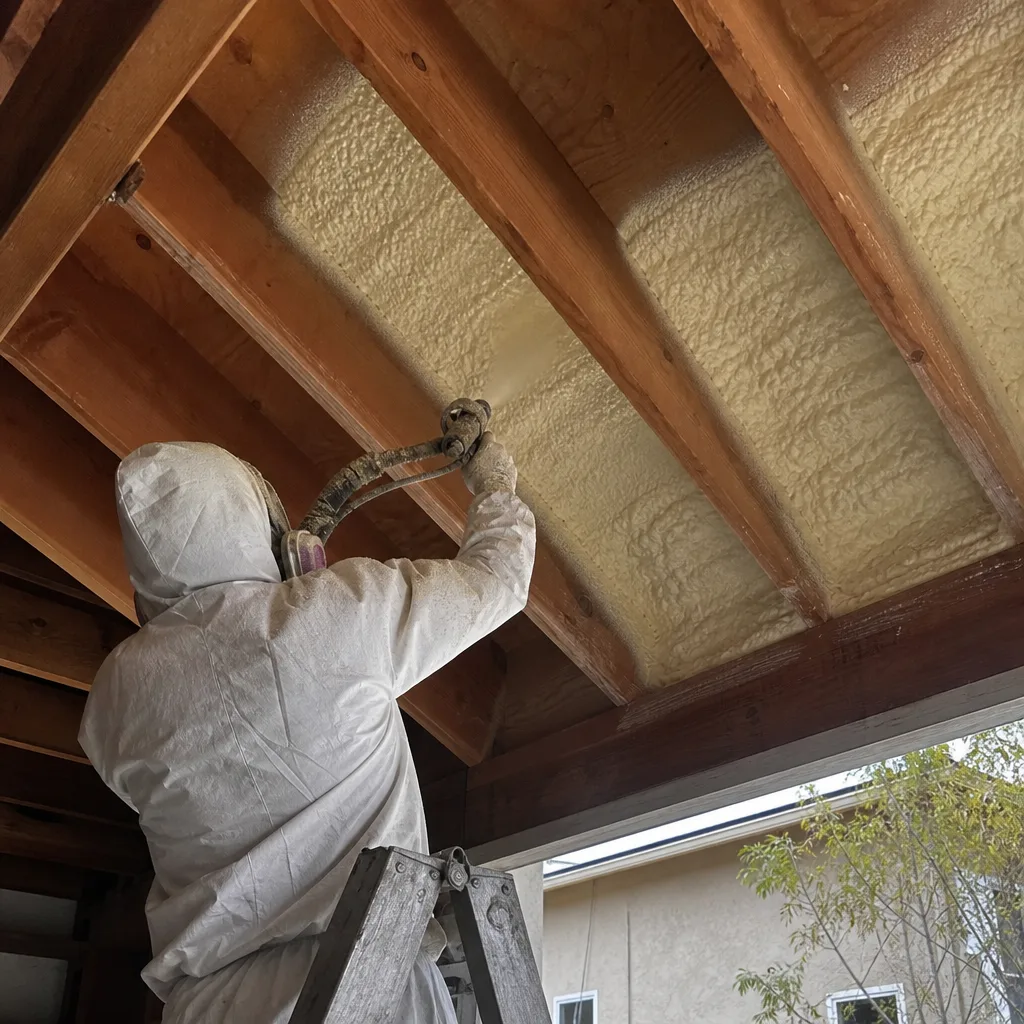
How GreenFiber Products Fail – and How We Fix Them
GreenFiber makes two very different things: blown-in cellulose (their SanctuCIF series, the stuff most people picture when they hear the name) and, in partnership with spray foam manufacturers, open-cell and closed-cell foam insulation that carries the GreenFiber name on the job spec. In Woodland Hills we mostly see the spray foam side fail in the same handful of ways. Here is what we find when we get into an attic:
- SanctuCIF settlement around rim joists: GreenFiber’s cellulose is a loose-fill product. When it is blown against a rim joist and then a closed-cell spray foam is added later to air-seal, the cellulose can settle away from the foam edge over two or three winters, leaving a thin thermal break at the sill. Homeowners notice cold floors above the garage in January. We re-pack the void with a GreenFiber-compatible dense-pack method, then re-foam the seam so the two materials actually meet. The fix holds because we address the gap, not just the symptom.
- Open-cell spray foam losing structure in high heat: Woodland Hills regularly sees attic temperatures above 140°F in July and August. Open-cell foam installed against the roofline can develop shrinkage cracks from repeated thermal cycling if the original installer went too thin. You will see hairline separation along the rafter bays. We remove the affected sections and re-spray at the correct depth for our climate zone, which is deeper than what a milder coastal job would require.
- Closed-cell foam delaminating from plywood roof decks: This one shows up in older Woodland Hills ranch-style homes built before modern deck ventilation was standard. If closed-cell foam was applied to damp plywood or without proper surface prep, it can lose adhesion and pull away in sheets. The tell is a hollow knocking sound when you tap the deck from inside the attic. We cut out the delaminated section, dry the deck, and re-apply with proper substrate temperature control. GreenFiber-labelled closed-cell foam needs a clean, dry bond surface, and we prep for that every time.
- Overspray into soffit vents blocking airflow: A common installer error on GreenFiber foam jobs in this area: soffit vents get foamed over, which traps heat and moisture in the attic. You may see condensation on nails in the winter. We clear the vents, install proper baffles, and re-foam only where the air seal is supposed to be. The roof needs to breathe, even with foam insulation.
- Pet-related damage to low-cavity foam: In crawlspaces and garage ceilings, closed-cell foam can be scratched or torn by animals that got in through a foundation crack, or by household pets in an unfinished space. We remove the damaged foam, check the entry point, and recommend sealing it before re-insulating. On jobs like this we also flag pet-safe alternatives where a choice exists, because the dog is often in the garage while we’re working.
Our GreenFiber Spray Foam Insulation Process
Every GreenFiber job in Woodland Hills follows the same careful sequence. Here is what a typical call looks like from start to finish:
- 1
We answer the phone. A live person picks up, 24/7. You describe what you are seeing: a cold room, a drafty rim joist, a hot upstairs. We ask a few questions about the age of the home and the type of insulation you know is up there.
- 2
We walk the house. One of our uniformed, background-checked techs arrives in shoe covers, with drop cloths for the hallway. Neil Barron personally walks many Woodland Hills jobs himself. We inspect the attic, the rim joists, the garage ceiling, and any visible spray foam before anyone touches anything.
- 3
We write your number down. You get a written price that covers the specific materials and labor for your GreenFiber repair or re-application. No ranges, no verbal ballpark. The number covers what we are doing, down to the last bag or board foot of foam.
- 4
We do the work. We lay protection from the front door to the attic hatch, work with quiet tools where possible, and check the substrate temperature before any foam goes down. OEM and quality aftermarket material decisions are made in front of you, with the trade-offs explained.
- 5
We test and verify. Before we leave, we check the adhesion, the depth, and the air seal. You get photos of the finished work.
- 6
We clean up and show you. We photograph the clean-up before the van pulls away. That is part of the C.A.R.E. promise: Clean up like it is our own home. Then the 365-Day Done Right Promise kicks in. If it is not right, we come back and make it right.
What GreenFiber Spray Foam Insulation Costs in Woodland Hills
Spray foam pricing in Woodland Hills runs higher than in some other parts of Los Angeles County because many of the homes here are older ranch builds with tight attic access, and because the heat load means we spray thicker. Here is what you can expect for common GreenFiber-related spray foam work:
- Rim joist re-foaming and air seal: $450 – $950 depending on linear footage and access
- Open-cell rafter bay repair: $700 – $1,400 per affected section
- Closed-cell delamination repair on a roof deck: $1,100 – $2,200 depending on square footage
- Garage ceiling spray foam repair: $600 – $1,300
- Soffit vent clearing and baffle installation with re-foam: $350 – $700
Access is the biggest price mover: a tight attic hatch or a steep roof pitch adds time. Material depth for our hot summers is the second factor. Whatever the job, the exact number goes in writing before the work starts. Call (559) 245-9223 and we will come out, look at your insulation, and put the number in your hand.
Why Woodland Hills Homeowners Call Thistledown Insulation Woodland Hills for GreenFiber Work
Thistledown is the soft fluff of the thistle, one of nature’s lightest insulators. The name is a promise about how carefully we work. We are an independently owned Cedarwell-family company, founded in 2003, and we hold every job to the Cedarwell Care Promise: shoe covers and drop cloths inside your home, a photo of the clean-up before we leave, quiet tools when the baby is napping, and a live person answering every call, day or night. Neil grew up on the San Fernando Valley side of Los Angeles and learned the trade through the construction technology program at Los Angeles Pierce College in Woodland Hills. He knows the older ranch-style builds around Warner Center well enough to spot a thermal gap before the blower door test confirms it. If GreenFiber foam is not the right call for your specific attic, we have seven other brand lines on the truck, and we also service Reflectix for radiant barrier applications. We are not married to one product. We are married to your attic being done right.
FAQs
No. As an independent GreenFiber service provider, we work within the manufacturer’s installation tolerances and material specifications. The original installer’s workmanship warranty may require specific repair practices, and we document everything so you have a paper trail. We cannot speak for GreenFiber’s warranty department directly, but our repairs are done to the same standard as the original installation should have been.
Most jobs we can schedule within a few days, and rim joist or small foam repair work is often done within the same week. If you have a live problem like exposed foam or a pest entry point, call (559) 245-9223 and a live person will get you on the schedule. We do not use voicemail trees.
For localized damage, delamination, or thin spots, repair is almost always the cheaper path. Full replacement only makes sense when the foam has failed across more than 40 or 50 percent of the surface or when the original install was done so thin that you would be chasing problems forever. We will show you the numbers for both and you decide. The written estimate makes the comparison honest.
When the job requires matching the existing GreenFiber-labelled foam, we use OEM material wherever it is available. If a product line has been discontinued or is backordered, we use quality aftermarket foam with the same R-value per inch and the same open-cell or closed-cell characteristics. We explain the difference in front of you before the work starts. You will know what goes in before the first board comes down.
Yes. That is the point of the Cedarwell Care Promise. We wear shoe covers, lay drop cloths, use quiet tools where possible, and choose pet-safe insulation products where a choice exists. If the dog is home, the dog stays home. We work around naps and quiet hours. The attic is the last place you should have to worry about a crew in your house.
Written by Neil Barron, Owner, Thistledown Insulation Woodland Hills at Thistledown Insulation Woodland Hills, serving Woodland Hills and nearby areas.