
Rockwool Spray Foam Insulation in Woodland Hills: What to Know First
Rockwool spray foam insulation in Woodland Hills pairs mineral wool batts or boards with open-cell or closed-cell spray foam to seal air gaps that the Rockwool product alone can’t close. We’re an independent Rockwool service provider, not a manufacturer affiliate, and we complete most Rockwool-plus-spray-foam jobs in one to two days. You’ll have your written price before we touch the attic hatch, and every project carries the 365-Day Done Right Promise. If you own Rockwool insulation and want to know if spray foam makes sense for your home, call (559) 245-9223 for a free estimate.
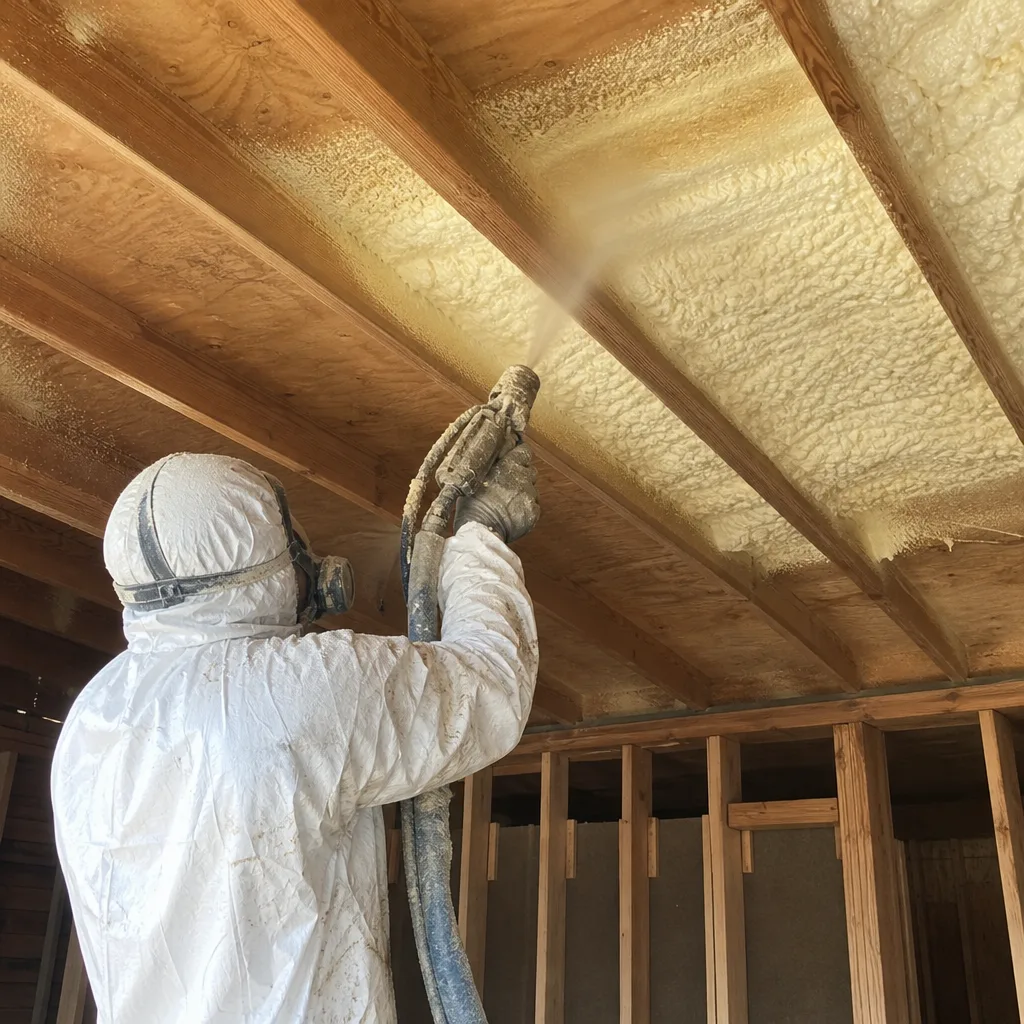
This page is for homeowners in Woodland Hills who already have Rockwool insulation and are either supplementing it with spray foam or replacing failed sections. We’ll walk through how Rockwool products behave in this specific climate, what to expect from the work, and what it costs.
How Rockwool Products Fail – and How We Fix Them
Rockwool is dense, fire-resistant mineral wool, and it does a lot of things well. But in Woodland Hills attics, where summer temperatures regularly push past 140 degrees, we see the same handful of failure modes again and again. Here’s what we find and what we do about it.
- Safe’n’Sound compression in knee walls. Safe’n’Sound is designed for interior sound control, not thermal performance. When we find it stuffed into knee walls or attic side walls, it’s usually compressed against the drywall, which cuts its already-modest thermal value. The real issue is that compressed batts leave voids at the top and bottom of each cavity. We pull the compressed sections, air-seal the cavity edges with closed-cell spray foam, and re-install the Rockwool to full loft.
- Comfortbatt settling around recessed can lights. Comfortbatt holds its shape better than fiberglass, but around recessed light housings we see gaps open up as the batts get nudged during electrical work or HVAC service. Those small gaps let conditioned air escape into the attic. We foam-seal the housing perimeter with a fire-rated closed-cell foam, then re-fit the Comfortbatt tight to the foam boundary.
- Moisture wicking at the attic floor line in older ranch homes. Woodland Hills has a lot of 1950s and 1960s ranch-style builds with minimal eave venting. Rockwool batts sitting directly on the attic floor can wick moisture from bathroom exhaust fans venting into the attic. The symptom is a musty smell that comes and goes with the seasons. We fix the venting first, then install a flash-and-batt system: closed-cell spray foam against the drywall, Rockwool over it.
- Rodent damage in Comfortboard applications. Rockwool’s exterior Comfortboard handles moisture well, but rodents like to burrow through it where it meets the roofline. We see this more in the hillside properties around Warner Center. If you’re hearing scratching near the eave line, the fix is usually replacing the damaged board and sealing the entry point with pest-resistant spray foam, then re-dressing the Rockwool.
- R-value gaps where Rockwool meets the top plate. This one shows up in just about every pre-1980 Woodland Hills attic. The batts cover the ceiling bays, but the top plates between studs remain bare because batts don’t drape over them. A two-inch pass of closed-cell spray foam along every top plate stops the thermal bridging that shows up as warm ceiling stripes on a thermal camera.
Our Rockwool Spray Foam Insulation Process
We do this work the same way every time, so you can picture the job before we start.
- 1
Call and walkthrough. You call (559) 245-9223, we schedule a visit, and Neil Barron walks your attic with you or reviews photos with you if you’d rather stay downstairs. We measure, photograph, and identify every spot where Rockwool isn’t doing its job.
- 2
Written price. Before any work starts, you get a written estimate that names the specific Rockwool products involved and the exact spray foam type we’ll use. No ranges, no “we’ll see when we get in there.”
- 3
Prep and protection. Shoe covers on at the door, drop cloths across every hallway we’ll walk, and the attic hatch sealed with a zip wall so dust stays out of the living space. If kids are napping, we use quiet tools.
- 4
Foam and Rockwool work. We spray the seal points first, then re-fit or replace Rockwool. We ask before moving anything you’ve stored in the attic, and we put it back where we found it.
- 5
Test and photo. We check our work against the areas we flagged in the walkthrough, photograph the finished surfaces, and photograph the cleanup. You see the before and after before we leave.
- 6
Warranty check-in. Every job is covered by the 365-Day Done Right Promise. If something isn’t right, we come back and make it right. No debate, no fine print.
What Rockwool Spray Foam Insulation Costs in Woodland Hills
Rockwool and spray foam combinations in Woodland Hills typically run from $1,800 to $4,200 for the average attic, depending on square footage, how much existing Rockwool stays in place, and whether you need open-cell or closed-cell foam. Closed-cell runs higher per board foot because of the material density, but it also adds structural rigidity and acts as a vapor barrier, which matters in older ranch homes with venting issues.
- Open-cell foam + existing Rockwool supplement: $1,800 – $2,800 (800 – 1,200 sq ft attic)
- Closed-cell flash-and-batt (top plates, eaves, knee walls): $2,500 – $3,800
- Full attic air seal + Rockwool re-fit with closed-cell: $3,200 – $4,200
- Garage ceiling or rim joist spray foam with Rockwool: $900 – $1,800
What moves the price most is attic access. If your hatch is tight and we’re hand-carrying material across a finished upstairs hallway, that takes longer than a drop-down ladder in a garage. You’ll have your exact written number before we start, and estimates are free. Call (559) 245-9223.
Why Woodland Hills Homeowners Call Thistledown Insulation Woodland Hills for Rockwool Work
Thistledown is the soft fluff of the thistle, one of nature’s lightest insulators. The name is a promise about how carefully we work. We’ve been at this since 2003 as part of the Cedarwell family of independently owned insulation companies, and we hold every job to the Cedarwell Care Promise: shoe covers and drop cloths inside the home, a photo of the cleanup before we leave, pet-safe product options where a choice exists, and quiet tools when children are sleeping. We install eight insulation brands, including Owens Corning, Johns Manville, Knauf, CertainTeed, Icynene, Demilec, and GreenFiber, so we’re not married to one product. If a Rockwool section needs replacing and we have a better-fit option, we’ll tell you. We also service Reflectix for radiant barrier applications. Calls are answered by a live person around the clock.
FAQs
No, Rockwool’s product warranty applies to the Rockwool material itself, not the assembly. Spray foam applied as a sealant around Rockwool batts or boards doesn’t void the Rockwool warranty. As an independent Rockwool service provider, we don’t speak for the manufacturer, but we’ve never seen a warranty claim denied because spray foam was added alongside the product. Call (559) 245-9223 and we can walk through your specific setup.
Usually not. We leave Rockwool in place wherever it’s dry, clean, and maintaining full thickness. We only remove sections that are compressed, rodent-soiled, or moisture-wicked. Ripping out good Rockwool is waste, and we’d rather give you an honest assessment than a bigger invoice. A written estimate tells you exactly what stays and what goes.
Yes, we match Comfortbatt R-values and thicknesses to what’s already installed, including R-15, R-23, and R-30 in the common 2×4, 2×6, and 2×8 cavity depths. If your attic has mixed thicknesses, we map them cavity by cavity and note each in your written price. No guessing, no “close enough.”
Repairing Rockwool and adding targeted spray foam sealing is almost always cheaper than a full spray foam replacement. A spray foam retrofit runs $3 to $7 per square foot for the foamed surface alone, while a Rockwool refit with foam sealing usually comes in under $2,800 total for the average Woodland Hills attic. We’ll tell you if replacement ever makes more sense, and we’ll put the numbers side by side in your written estimate.
In most Woodland Hills neighborhoods, we can schedule a walkthrough within a few days and complete the work within a week of the estimate. Emergency situations, like a section of Rockwool that’s been soaked by a roof leak, we handle as quickly as our schedule allows. Call (559) 245-9223 and a live person will get you on the books.
Written by Neil Barron, Owner, Thistledown Insulation Woodland Hills at Thistledown Insulation Woodland Hills, serving Woodland Hills and nearby areas.