
Johns Manville Radiant Barrier Installation: The Woodland Hills Owner’s Guide
If you have a Johns Manville radiant barrier that’s torn, sagging, or simply not performing the way it did when it went up, we stock Johns Manville-compatible radiant barrier materials and install them throughout Woodland Hills, usually within one to two days of your call. Most radiant barrier replacement jobs in Woodland Hills run between $1,400 and $3,600 depending on attic size, roof pitch, and whether we’re replacing sections or the full coverage. You’ll know it’s failing when upstairs rooms hold heat long after sunset, or when you spot foil delaminating from the backing material during a routine attic check. Call (559) 245-9223 and we’ll give you a written price before any work starts.
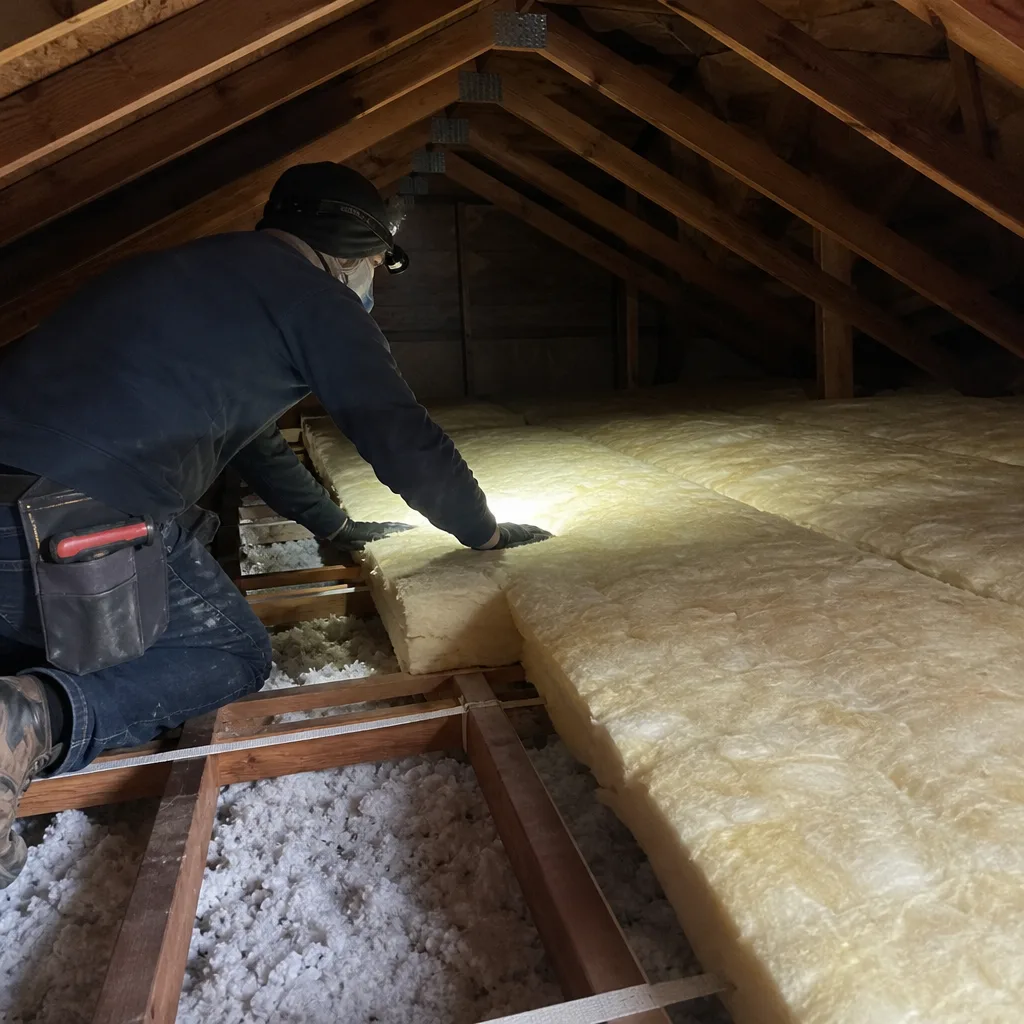
Key Takeaways:
- We stock Johns Manville radiant barrier on the truck for most Woodland Hills attic configurations
- Typical installed cost runs $1,400 – $3,600 depending on attic square footage and obstruction density
- Radiant barrier fails most often from dust accumulation, improper stapling, or attic moisture in Woodland Hills’ marine-layer climate
- We’re an independent installer, not a Johns Manville affiliate, so we can match any spec honestly
- Every job includes a written price, shoe covers, drop cloths, and a photo of the clean-up before we leave
Which Johns Manville Models This Applies To
Johns Manville manufactures radiant barrier under a few product names, and the compatibility question usually comes down to whether you have a single-sided foil, a double-sided foil, or a perforated product. The most common in Woodland Hills attics is the single-sided foil with a kraft or polymer scrim backing, sold in rolls of 250 to 500 square feet. We’ve also pulled out plenty of the perforated version, which matters because perforated radiant barrier does not work as a vapor barrier, and that changes how we detail the install around bathroom exhaust fans and can lights.
Here’s the compatibility gotcha most homeowners miss: radiant barrier is not a one-size-fits-all product, and the difference between a foil that reflects 95% of radiant heat versus one that reflects 80% is the purity of the aluminum layer and the emissivity rating printed on the roll label. Johns Manville publishes emissivity specs on each product line, and if your existing barrier is unlabeled, we measure the attic and test a small sample before recommending replacement. We’re an independent installer, not a Johns Manville affiliate, so if an aftermarket equivalent from Reflectix actually matches your attic conditions better, we’ll tell you that too. The point is the right material for your specific roof deck, not brand loyalty for its own sake.
Signs Your Johns Manville Radiant Barrier Installation Is Failing
- Upstairs rooms stay hot after dark: This means the foil is no longer reflecting radiant heat back through the roof deck. In Woodland Hills, we see this most often when dust has settled over years and coated the reflective surface, dropping its performance from the mid-90s into the 70s or lower. The foil looks intact but has effectively stopped doing its job.
- Tears or sagging between rafters: Radiant barrier is held by staples, and when staples pull loose in older Woodland Hills ranch-style homes, the material sags, creating an air gap that renders it useless. A one-inch gap between the foil and the roof deck cuts reflectivity dramatically. Sagging usually means the original installer used the wrong staple type or spaced them too far apart.
- Foil is flaking or delaminating: When the aluminum layer separates from the backing material, you’ll see shiny flecks on your insulation or on the attic floor. This happens faster in attics that run hot and poorly ventilated, which describes a lot of Woodland Hills homes built before ridge vents became standard. Delamination is not repairable, it’s a replacement.
- White chalky residue on the foil surface: That’s oxidation, and it is the quiet killer of radiant barrier in coastal-adjacent climates like ours. Moisture from the marine layer works its way into the attic, condenses on the foil, and slowly eats the reflectivity. The barrier can look fine from across the attic but be dead on arrival.
- You’re finding foil scraps in your HVAC filter: Radiant barrier fragments traveling through the return air means punctures or tears somewhere in the attic, often from a previous pest problem or from someone crawling through without laying down boards. If it’s in your filter, it’s also in your ducts and on your blower motor.
Replacement Cost & What’s Included
In Woodland Hills, you should expect to pay between $1,400 and $3,600 for a full radiant barrier replacement, and here’s where that range comes from. A smaller attic around 1,000 square feet with clear access and standard rafter spacing will land near the bottom of the range. A 2,500 square foot attic with knee walls, ductwork in the way, and tight clearances near the eaves will push toward the top. The material itself runs roughly 60 to 90 cents per square foot for Johns Manville-grade foil, and the rest is labor, disposal of the old barrier, and the attic prep work.
Every quote from Thistledown Insulation Woodland Hills includes the full scope in writing before we start: the exact square footage, the product spec, the labor, the disposal, and the number you’ll pay. No allowances for what we might find. Neil Barron sits down with you and walks through the line items until you know what goes in before the first board comes down. The work itself is backed by our 365-Day Done Right Promise. If it’s not right, we make it right, no debate, no fine print.
DIY or Call Us?
There are things you can safely check on your own, and things you should not attempt. You can absolutely inspect your attic from the access hatch with a good flashlight and look for tears, sagging, or oxidation. You can photograph any damage and measure the accessible area in rough terms. What you should not do is crawl across joists to staple foil yourself, especially in the heat of a Woodland Hills summer. Radiant barrier installation means working overhead in a confined, hot space, often around exposed roofing nails, and the risk of a slip through drywall or a puncture from a nail is real. If you have a steep-pitched roof or a low-clearance attic, we strongly recommend you leave it to a crew that does this every week. We bring the right staple guns, the right fall protection, and the right protective gear. And we lay down boards so we never put a boot through your ceiling. If you’re not sure whether yours is repairable or needs full replacement, call (559) 245-9223 and describe what you see. We’ll tell you straight what it likely needs and what it’ll cost to fix properly.
FAQs
A properly installed Johns Manville radiant barrier in Woodland Hills will typically last 15 to 20 years before reflectivity degrades enough to matter. The limiting factor in our climate is attic dust and marine-layer moisture, which is why we recommend an attic inspection every five years even if nothing feels wrong. Call (559) 245-9223 and we’ll schedule a look at no charge.
Small tears of under a few inches can sometimes be patched with foil tape if the surrounding material is still adhered and reflective, but sagging, oxidation, or delamination means replacement. The threshold is whether the damage covers more than about 10% of the total foil area, and whether the underlying cause, like bad stapling or moisture, is still active. If the original staples failed, they’ll fail again without a proper re-install.
Most radiant barrier replacements in Woodland Hills take one full day for a 1,500 square foot attic, or two days if we’re also removing old insulation, air sealing, or working around heavy ductwork. We arrive with shoe covers, drop cloths, and quiet tools, and we work around your family’s schedule. You’ll know the timeline before we start, in writing.
Yes, we stock Johns Manville single-sided and perforated radiant barrier in standard roll widths, and we can have double-sided or odd-width rolls at your home within a couple of days. We also carry Reflectix aftermarket equivalents when the attic conditions call for it. The estimate will tell you exactly which product we’re using and why, down to the emissivity rating.
Written by Neil Barron, Owner, Thistledown Insulation Woodland Hills at Thistledown Insulation Woodland Hills, serving Woodland Hills and nearby areas.